

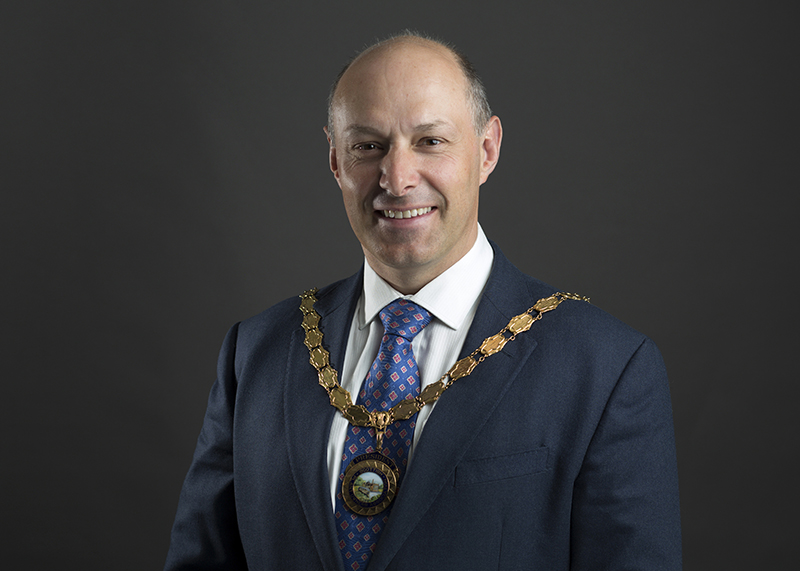
By David Jarvie, president of the Scottish Plant Owners Association (SPOA)
I have reused this headline from the Scottish Government’s consultation which sought views on measures to speed up the delivery of new homes as part of its response to the housing emergency. That consultation closed in April and followed the previously announced creation of More Homes Scotland (MHS), a new housing delivery agency, promising a ‘significant step-change’ in addressing the housing emergency by delivering more high-quality housing. Sounds good, doesn’t it? However, MHS will not commence activities until April 2027 and will not be fully operational until April 2028. So just 19 months to wait until we see this ‘acceleration’ of home building in Scotland.
In the meantime, housebuilding is in a deep, multi-year stagnation that has created a massive gap between government delivery targets and actual on-site activity with negative consequences and a bleak economic outlook for the Scottish plant industry.
The scale of the house building crisis
The proportion of plant machinery allocated to housebuilding aligns closely with overall construction sector outputs. According to the Chartered Institute of Building (CIOB), within the broader Scottish construction mix, housing accounts for over 22% of all workloads. It’s safe to assume therefore that at least a quarter of the business of Scotland’s plant owners and plant hirers is in house building. Any downturn in housebuilding has a direct impact on the plant industry and there are more factors slowing down housebuilding than there are accelerating it.
Planning approvals
Industry research from the Savills Scotland Residential Development Market report reveals that the number of homes being granted full planning consent in Scotland has more than halved since 2020.
The Scottish Government’s own statistics reveal that up to 164,000 units have planning permission but remain unbuilt due to viability and infrastructure costs; 114 sites (representing ~20,000 potential homes) were flagged as stalled or blocked from gaining permission; and the latest new build statistics up to the end of March 2026 show that the total number of new homes completed across all tenures in 2025/26 was down 10% on the previous year. Starts were down by 4%. Private sector completions were down 8% and starts down 12%. Social sector completions were down 16% but starts increased by 25%.
Rising building costs
It is estimated that the cost of construction has increased by 4.25% in the year leading to Q1 2026. This, combined with challenging planning systems and rigid regulatory and infrastructure frameworks, is creating a severe developer viability crisis across the UK property sector. Perhaps the best examples of this are Taylor Wimpey and Berkeley Group, two of the UK’s largest housebuilders, who made the headlines this month for calling out the challenging development environment in London, changes in leadership and ongoing regulatory pressures. Both companies have announced they will no longer buy land to develop in London, with Taylor Wimpey stating that the economic case for doing so has evaporated.
The fear is that this is not just a ‘London issue’ and that these challenges are being faced by developers all over the UK.
Skills shortage
The other factor which is challenging housebuilding and the plant and construction industry is the skills shortage, which is more acutely felt in Scotland than the rest of the UK.
The CIOB estimates that Scotland needs approximately 3,590 to 5,220 new construction workers every year to meet current workloads, housing targets and climate goals. Furthermore, The Federation of Master Builders estimates that around 30% to 40% of Scottish construction firms regularly report worker shortages, and 72% of firms state that a lack of skilled tradespeople has caused projects to be delayed or cancelled.
A planning system that is not fit for purpose, rising costs of doing business and critical shortages in skilled labour are all contributing to create a perfect storm.
Renewed call on the Scottish Government
Earlier this year, the Scottish Plant Owners Association (SPOA), along with other leading construction bodies in Scotland, warned that national housing and net zero targets are at risk without a ‘radical shift’ in workforce planning. The Scottish Construction Qualifications & Skills Council’s skills manifesto was also launched, which called for:
- The appointment of a cabinet-level minister to provide a single, high-level voice for construction and infrastructure within the Scottish Government
- A Scottish construction workforce action plan with a system-wide review to align the supply of skills with future demand
- Protection and expansion of apprenticeships, making sure the ‘world-class’ Scottish apprenticeship model is ring-fenced and grown
- Funding reform, with a review of the current apprenticeship funding model to reflect the true costs of training
- A national construction skills passport with a digital system to record qualifications and health and safety certification for a mobile, modern workforce
None of the above has come to pass. We call on the Scottish Government once again to take more decisive action and quickly. In order to provide as much evidence as possible of the bleak economic outlook for Scotland’s plant industry, we are calling on our members to share their challenges with us.
Please contact me directly at david.jarvie@spoa.org.uk and we will lobby on your behalf to convince the Scottish Government to acknowledge that construction is not a peripheral concern but a central pillar of national prosperity and, if swift action is not taken to enable our industry to build our way out of this mire, then the Scottish economy will stagnate.