

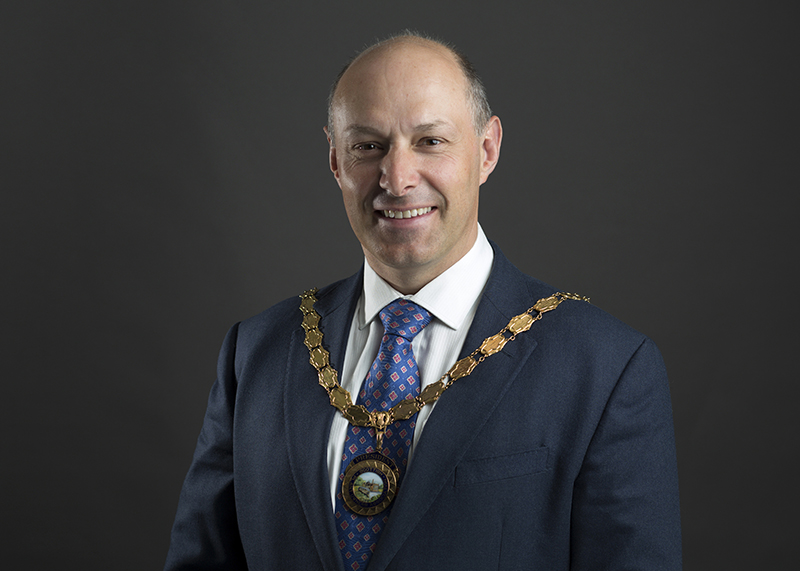
David Jarvie, president of the Scottish Plant Owners Association (SPOA), shares his thoughts on the autumn budget
CHANCELLOR John Healey has delivered a budget which he believes will give families and businesses breathing space from rising costs and get Britain building and growing again. Is he right?
Infrastructure
The chancellor has committed to some infrastructure projects in Scotland which I hope will create opportunities for the plant industry. £6 million has been allocated to fund the first phase of the Destination SEC masterplan at the Scottish Event Campus in Glasgow, converting this space into a vibrant outdoor public area and live events space, with a further £20 million for the creation of two defence technical excellence colleges in the east and west of Scotland. I urge all SPOA members to ensure they are well placed to tender for work on these new initiatives.
Housing
In the lead-up to the budget, I along with many others in the construction industry, highlighted the need to accelerate housebuilding, which accounts for around a quarter of the business of Scotland’s plant owners and plant hirers. There is some cause for optimism outlined in the autumn budget.
The freeze on building regulations provides much-needed regulatory certainty. It will allow developers to plan long-term project pipelines without fear of shifting compliance costs.
The removal of biodiversity requirements from brownfield sites is welcomed as it standardises and accelerates the pre-construction phase, lowering overheads for urban regeneration and brownfield developments.
The decision to exempt VAT on public land sold to social housing providers, combined with cheaper council borrowing for housing, should improve the financial viability of affordable housing projects, driving demand for framework contractors and regional housebuilders.
Finally, the introduction of a new first-time buyer ISA will hopefully stimulate underlying consumer demand for new-build homes, boosting order books for housebuilders.
Let’s hope that these measures encourage growth in housebuilding, providing a much-needed boost for Scotland’s plant industry.
Fuel duty
Whilst the decision to extend the 3.7p-per-litre cut in red diesel duty and the 5p fuel duty cut until next July will provide short-term certainty, it will not shield businesses from sharp surges in wholesale diesel prices or tackle the squeezed margins we continue to face with fuel prices around 65% higher than a year ago.
This new government is fond of ‘everyday fixes’ and an ‘accumulation of smaller things’ in an attempt to ease the financial burden on households and businesses. The announced increase of the higher mileage rate from 25p to 35p per mile is one such measure which SPOA members should welcome.
Paternity leave
Self-employed fathers and partners will now be eligible for paid parental leave. This is a significant measure for the plant industry with many SPOA members being self-employed and will give them up to two weeks of parental leave with an entitlement of up to £194 per week.
National Minimum Wage
We support the decision to increase the National Minimum Wage and National Living Wage by 3.9%. However, this measure also adds to the seemingly never-ending cost of running a business. An increase in the minimum wage also brings an increase in employers’ national insurance contributions (NIC). It will squeeze margins yet further and in the plant industry there is already very little headroom with capital costs and fuel costs rising, combined with an intensely competitive marketplace that makes any increase in plant hire rates extremely challenging.
A key focus for the SPOA, and indeed the wider construction industry, is the chronic skills shortage. The Chartered Institute of Building (CIOB) estimates that Scotland needs approximately 3,590 to 5,220 new construction workers every year to meet current workloads, housing targets and climate goals. Apprenticeships are key to solving this skills shortage. In September, the Scottish Government announced a 10% increase in Modern Apprenticeship contribution rates for the 2027–28 financial year, which we welcome.
Prime Minister Andy Burnham has been clear about his priority to support young people, with research indicating that 1,012,000 people aged 16 to 24 are currently not in employment or education. The autumn budget did deliver some measures which will address this need including the Youth Employment and Skills Package, and the Mayoral Apprenticeship Brokerage Fund. These apply to England only and it will be interesting to monitor the success of these programmes and the scope to replicate similar models north of the border.
Conclusion
Completely absent from the autumn budget was any intent to reverse the punitive decision by the previous chancellor of the exchequer relating to Agricultural Property Relief (APR) and Business Property Relief (BPR). Despite persistent lobbying by many sectors including plant and farming, the £2.5 million cap on assets qualifying for 100% relief remains frozen.
With the Scottish Government already warning of a real-terms cut of roughly £650 million for 2027-2028 we will need to wait for the Scottish budget on 3rd December to get a full picture and see if further measures can be introduced to kickstart much-needed growth. We urgently need an acceleration of house building and significant public infrastructure projects to reverse this economic stagnation.
Until then, as business owners and consumers navigating our way through an economy with low growth, downgraded to 1% for 2027 by the OBR, and high inflation – expected to peak at 4% next year – we have a little breathing space but no more.