


STEVENS Equipment Rental (SER) has hailed the impact of Ultimate Cell’s hydrogen-on-demand technology, following the conclusion of a nine-month field trial.
The evaluation focused on two heavy-duty assets: a 35-tonne excavator and an 18-tonne loading shovel from the SER fleet. Using the OEM telematics, SER and Ultimate Cell tracked daily fuel consumption for three months to establish a baseline, followed by six months of active monitoring post-installation.
During the six-month active monitoring, the excavator is said to have delivered consistent fuel savings. Based on annual operating hours of 2,000, SER estimates that thousands of litres of fuel and over 10 tonnes of CO2 could be saved. In peak conditions, savings of over 25% were recorded.
The loading shovel trial also showed an overall reduction during the six-month period, with savings of over 10% in some cases compared with a traditional machine operating under the same conditions.
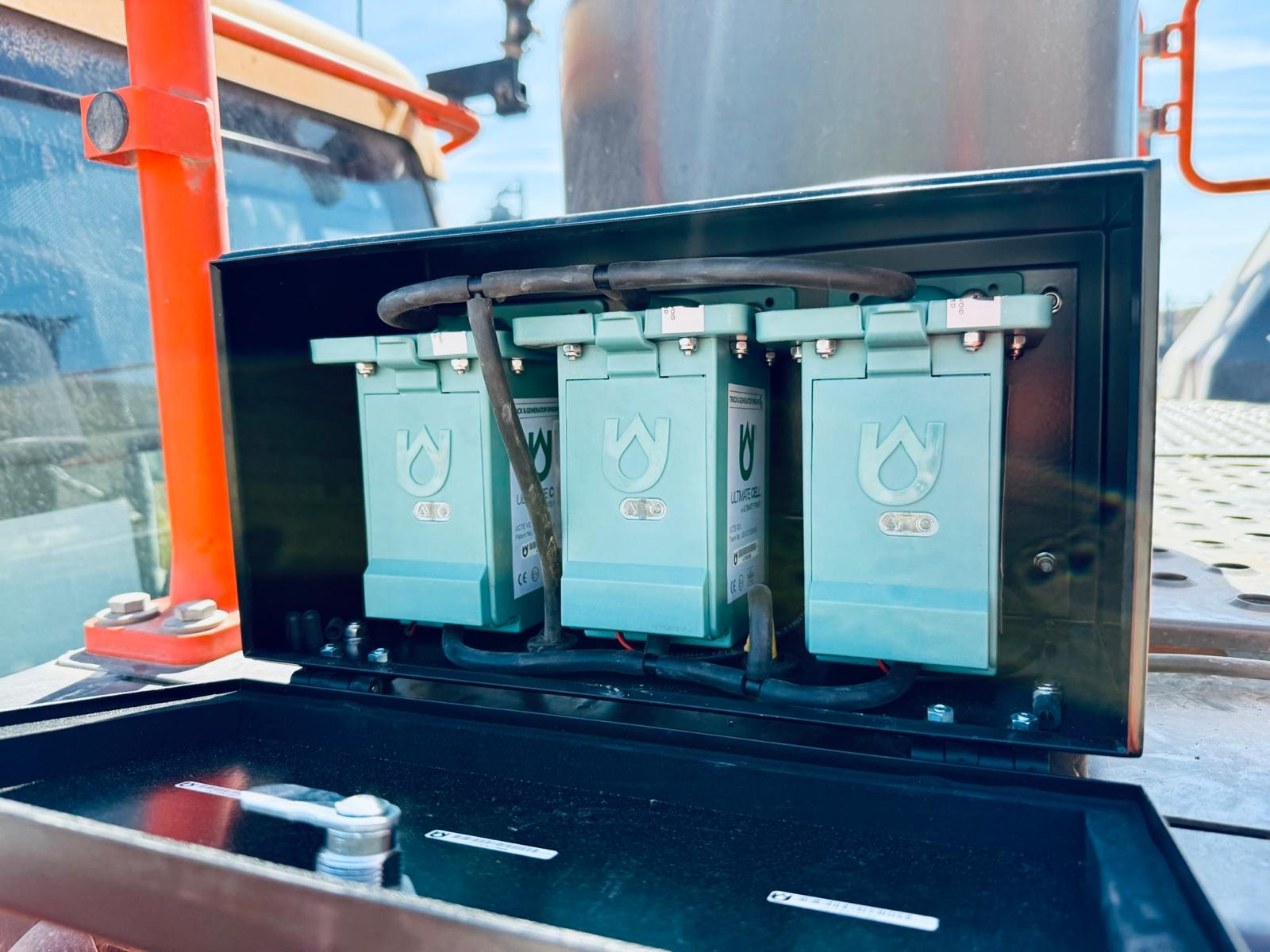
Operators noted ‘stronger torque, smoother operation, and quieter engine behaviour’ across both machines.
“We are taking a pragmatic approach to decarbonisation,” explained Mark Need, sales manager for Scotland and the north of England at SER. “While the industry waits for large-scale electric or full-hydrogen solutions to become commercially viable for heavy earthmoving – especially in remote locations – this trial proves our customers can use Ultimate Cell to reduce their impact today. It strengthens sustainability proposals for contractors tendering for major infrastructure projects.”
The non-invasive retrofit system draws a low amperage from the engine battery to split an electrolyte fluid into hydrogen and oxygen, which are then injected into the engine air intake in controlled, small amounts. These gases act as a catalyst to accelerate combustion for a more complete fuel burn that enables the engine to generate higher torque from the same volume of diesel with ‘significantly less’ soot.
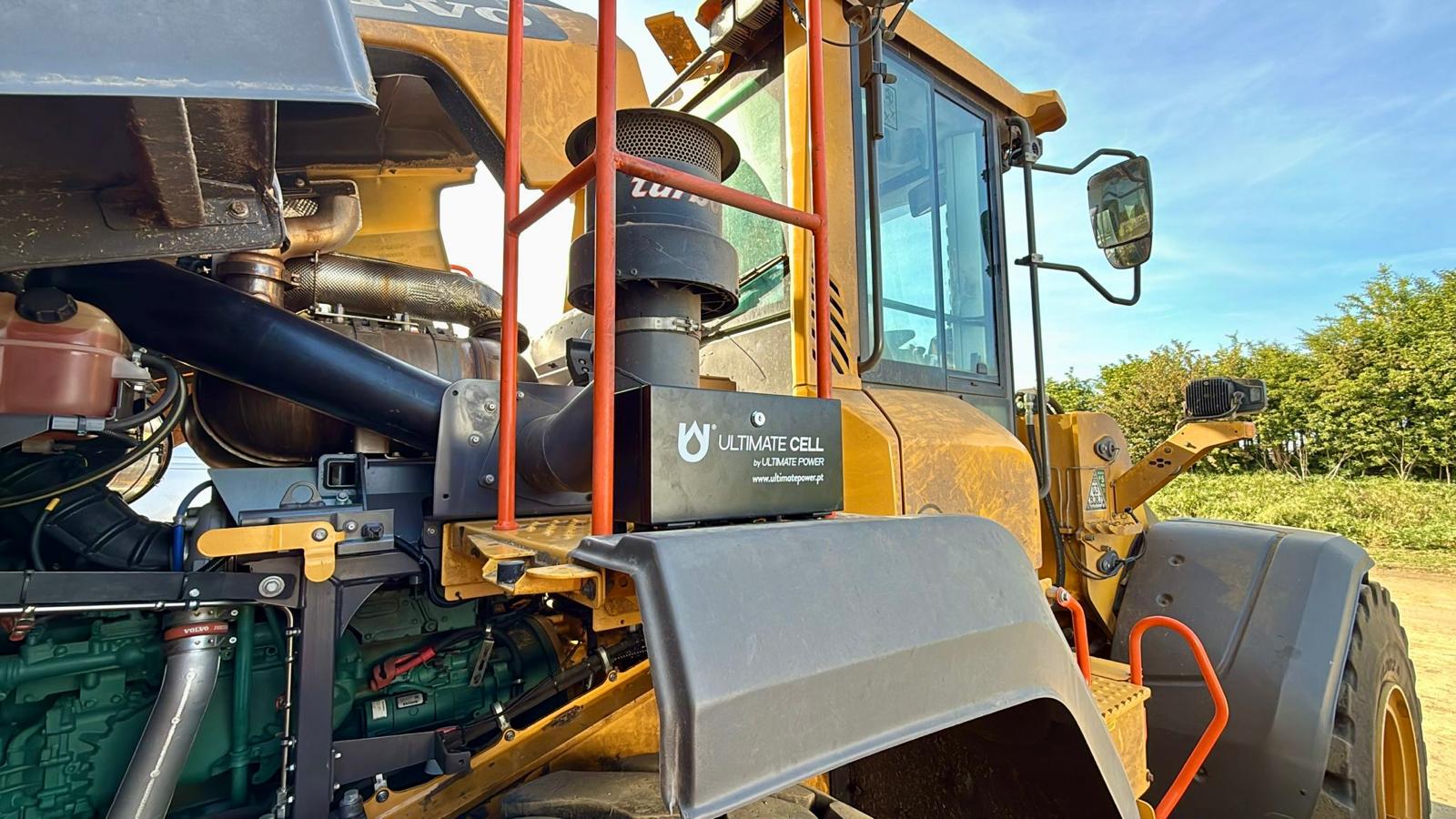
Over time, the high-temperature chemical reaction of the hydrogen helps to gradually strip existing carbon deposits from the engine, which may also contribute to a reduction in carbon build-up.
The only maintenance required is electrolyte replacement, which is typically required at extended operating intervals and only takes minutes. The fuel cells can be removed to return equipment to the original OEM condition or transferred to other machines.
SER has now integrated the technology into its commercial offering. Customers can specify Ultimate Cell installation on machines hired to meet project-specific ESG requirements.
Gareth Eeson, MD of Ultimate Cell UK, added, “The SER team went into the trial with an open mind and a genuine appetite for innovation. They worked supportively with us to optimise the set-up with fortnightly check-ins at the start and a commitment to double-checking every result. SER can now confidently offer a solution that is largely invisible to the operator, but highly visible on the balance sheet and the sustainability report.
“By combining structured data analysis with real operational feedback, we’ve demonstrated that combustion optimisation can deliver measurable fuel and emissions reductions today, without waiting for future infrastructure or fleet replacement.”