

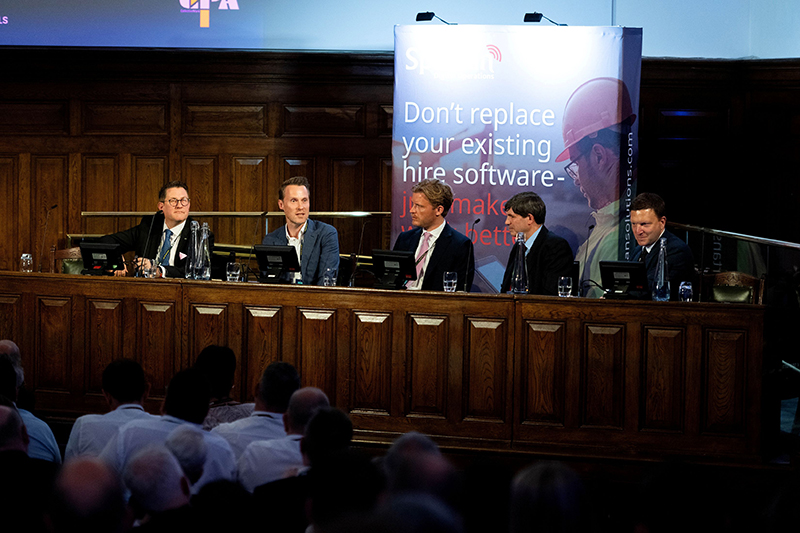
THE biggest issues facing the UK construction sector were put under the spotlight at the recent Construction Plant-hire Association (CPA) Conference in London.
The event brought together plant hirers, suppliers, operators, communications strategists and politicians. Under the theme of ‘Unlocking the Nation’s Growth Plans’, almost 150 delegates gathered at the historic One Great George Street – the HQ of the Institution of Civil Engineers.
Opening the conference, Steve Mulholland, CPA CEO, said the association had made significant strides in campaigning for change amongst regulators and legislators in areas such as skills, training and rising fuel costs. He explained that for every £1 spent on construction, £3.30 was generated in the wider economy. He was pleased that CPA now had frequent dialogue with MPs – two of whom spoke at the event.
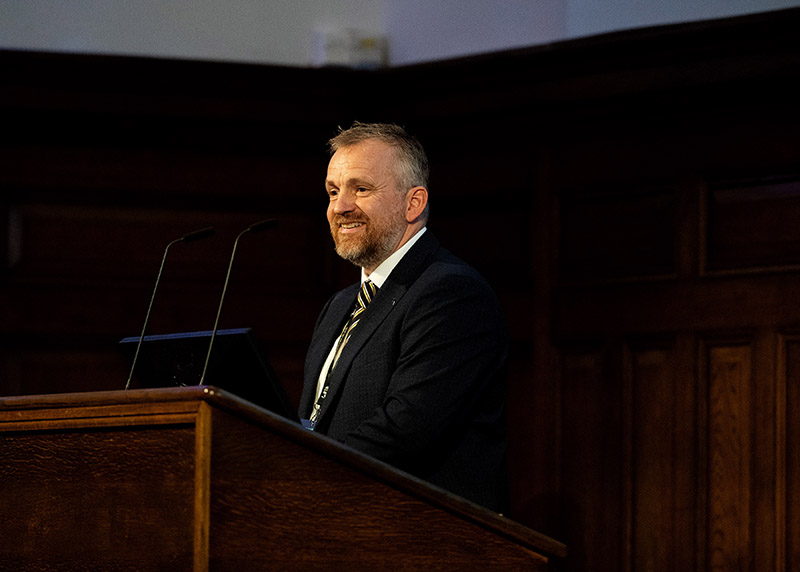
The first, Richard Fuller, MP for North Bedfordshire and shadow chief secretary to the treasury, gave the keynote political address. He said it was vital for the public sector to maintain close links with the construction industry, however he felt the current government put obstacles in the way of progress, with project guidelines and tender requirements often reflecting political objectives rather than practical delivery.
The first conference session was led by Graham Robinson, global infrastructure and construction lead at Oxford Economics and titled ‘Half-Built Britain: Unlocking the Nation’s Infrastructure Growth Plans’. He said the consultancy forecast little or no growth in the UK this year, with inflation possibly rising and interest rates not being reduced quickly.
Session participant Chris Cassley, policy director at the CPA, had a government wish-list that included the need to create the role of infrastructure secretary in cabinet; that fiscal policy should prioritise growth and business investment; and national planning policy frameworks needed to be decided. He also wants more focus on training a skilled workforce.
Cameron Brown, director at the Charlesbye public affairs and communications consultancy, echoed the call for greater public sector consistency. Business taxation had to be combined with growth incentives, and employment requirements both current and future had to be addressed.
Peter Gibbs, CEO with Ainscough Crane Hire, agreed that greater government focus and clarity were needed. He felt there was no clear pipeline of work and infrastructure investment.
Chris Matthew, chief commercial officer with Plantforce Rentals, said pipelines required clear timetables for progress. Often, people focused on the ‘stories’ of a project and its aims, rather than the realistic necessities of delivery.
Mark Hoad, sales and marketing director with Sunbelt Rentals UK & Ireland, agreed there had been a tendency towards short-term government thinking, especially regarding large infrastructure ‘mega-projects’.
The second conference session addressed future employment requirements, entitled ‘Building Skills for the Workforce’. Molly Gill, an award-winning plant operator with Flannery Plant Hire, recounted her career path from a nursery assistant to attending a government-funded bootcamp for young people run by Flannery where she discovered her passion for plant. Molly said it was important that schoolchildren were told about the opportunities offered by modern construction techniques and technology.
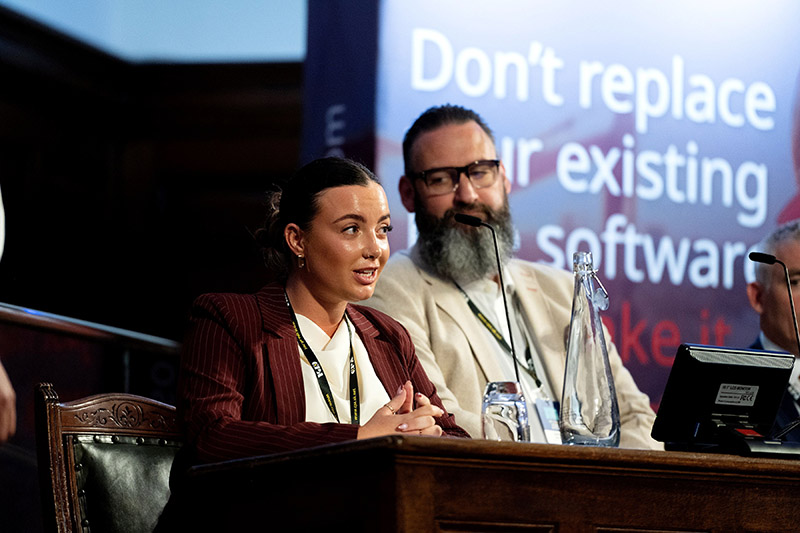
Aaron Davis, safety and skills director with Flannery, described the success of the bootcamp initiatives, which have seen more than 2,500 people participate in three years.
Rob Lynch, joint MD with L Lynch Plant Hire & Haulage, said that given the scope and scale of opportunities, individual firms simply could not cover all recruitment and career possibilities. And some funding opportunities came with certain parameters, such as only being for those out of work for a certain length of time.
Paul Skitt, MD of Business and Skills Support, suggested a government-backed National Infrastructure Fund, led by employers, could help identify training requirements and deliver them with consistency.
The third conference session had just one participant: Lee Cain, founder of the Charlesbye strategic advisory firm, speaking on ‘Effective Communications in a Crowded Space’. The former Downing Street director of communications during the pandemic said people were surrounded by more messaging noise that ever before, and in order to cope, they would filter out what they considered irrelevant.
The final session focused on ‘Decarbonisation and Preparing for the Future’, led by Luis Bassett, CPA’s decarbonisation and sustainability manager. He said climate change was a very real threat and advocated a pragmatic approach, suggesting net zero need not be achieved immediately but rather in measured stages with gradual reductions towards the desired target.
Chris Sleight, MD of the Off-Highway Research consultancy, revealed battery-electric machines accounted for only 0.4% of UK construction plant sales in 2025; but in China the figure was 15%, in Norway 9% and in the Netherlands 8%. These other countries, he said, had subsidies in place to help equipment owners transition.
Similarly, Steve Moody, MD of SKM Asset Finance and Consultant at Construction Plant Finance, contrasted availability of finance for electric vehicles against that for construction plant.
Charles Bénard, chief product officer and co-founder of the Hiboo tech business, said the company’s digitisation systems allowed equipment operators to benefit from telematics data gathered from various machine types, from different manufacturers.
Joe Gallagher, a senior consultant and partnerships director with ESG PRO, said ESG considerations were increasingly important in the contract tendering process, with clients specifying KPIs in contracts, as well as encouraging local sourcing of products and services.
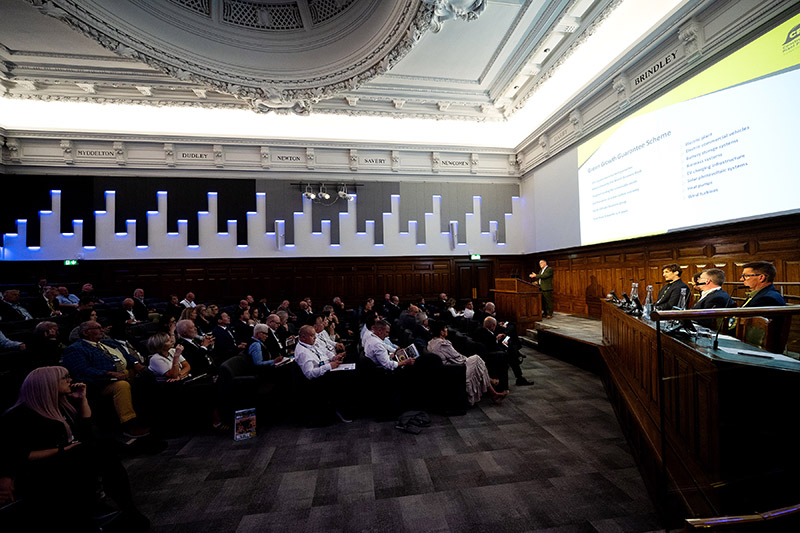
The conference was closed by the second MP speaker of the day, Jerome Mayhew, MP for Broadland and Fakenham, and shadow minister of state for transport. He posed a number of rhetorical questions to sum up the challenges, including: How can we respond meaningfully to where the country’s infrastructure needs to be? Why do projects take so long and cost so much? And what exactly do we need to fix? He said he has been tasked with seeking answers this summer, suggesting that instead of ‘steady as she goes’ we needed ‘scruff of the neck’ politics.