
MORE than 20 machines from Stevens Equipment Rental are helping RJ McLeod carry out work on the UK’s largest dry dock expansion at Kishorn Port in Strathcarron.
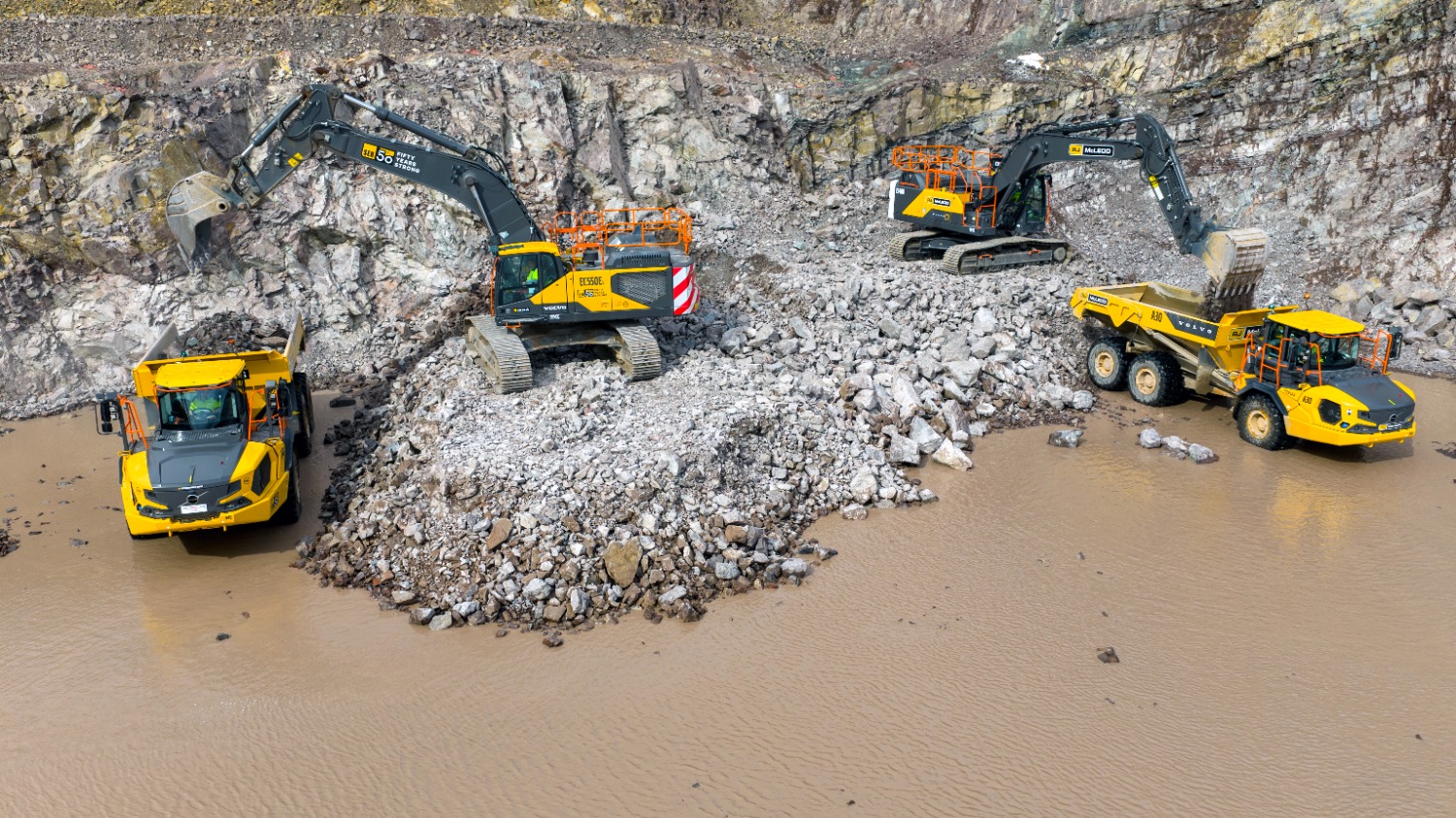
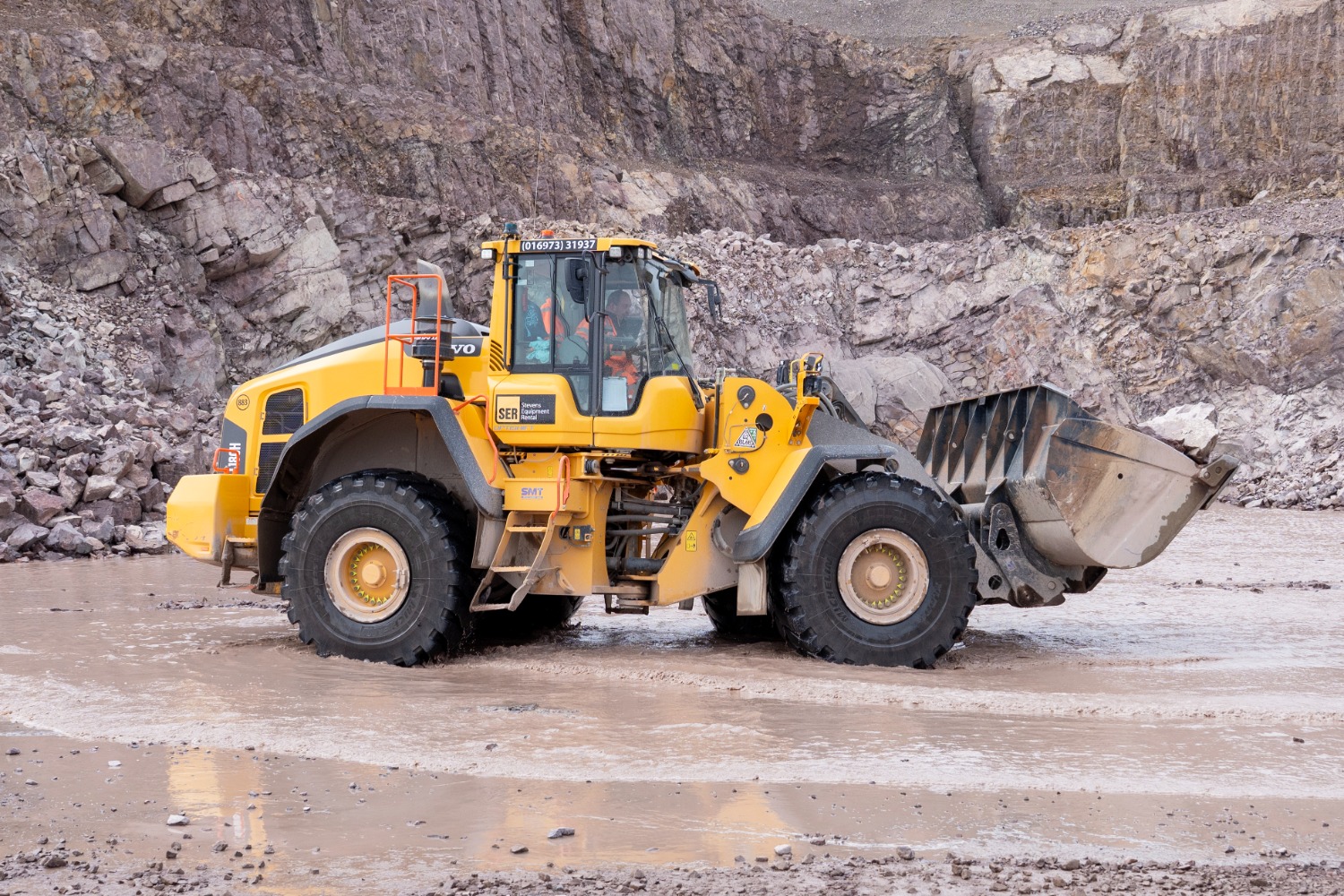
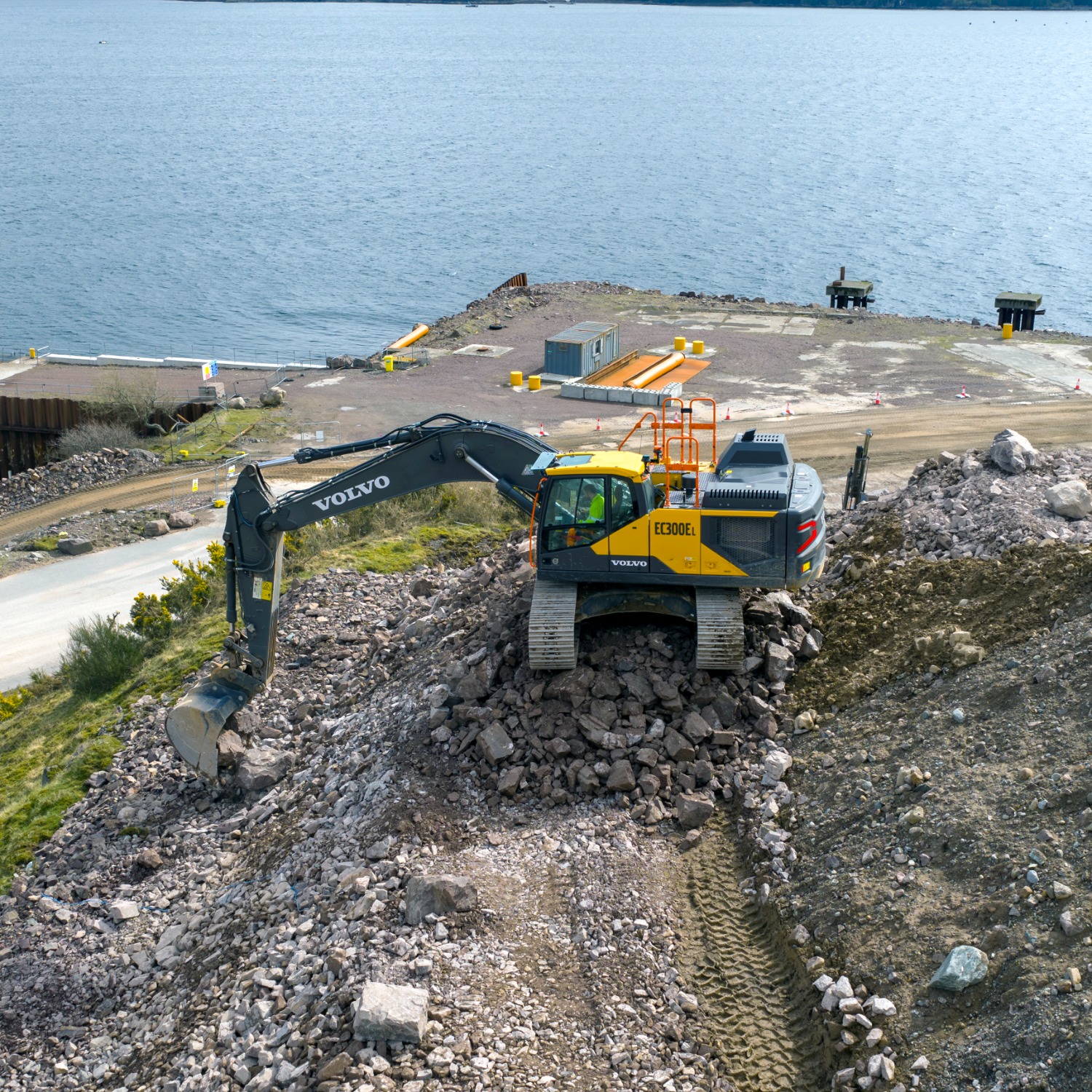
RJ McLeod is extending the dry dock and creating new laydown land. The machinery package on site includes Volvo A45 and A30 articulated haulers; Volvo EC550, EC400, and EC300 excavators; Volvo L180 wheel loaders; Caterpillar 352 excavators; and Caterpillar D7 and D6 dozers.
Originally developed in the 1970s for North Sea oil platform fabrication, Kishorn’s circular dry dock previously accommodated a 160 metre-long vessel sitting 13.8 metres below high tide level. The current scheme adds 100 metres of usable length to the dry dock while reclaiming an adjacent tidal area to establish nine hectares of critical laydown land – infrastructure designed to service the growing offshore wind, decommissioning, and aquaculture sectors.
Achieving the required depth and footprint meant relocating existing internal road networks before drilling and blasting more than 450,000m³ of Torridonian sandstone. Recognised as one of the oldest and most abrasive rock formations in the world, the dense sandstone placed severe demands on both ground-engaging tools and haulage machinery.
Rather than importing and exporting large volumes of material by road, RJ McLeod is processing, crushing, and reusing all excavated material on site. The approach supports the project’s sustainability objectives and limits road movements, but it also places a high and continuous workload on the mobile plant fleet.
To supply material for quayside protection, the site team intentionally designed a wide-spaced drilling and blasting pattern at the face. While this generated large, intact boulders suitable for use as rock armour, it also yielded material that required site-level segregation before further processing.
With abrasive sandstone coming off the face and multiple material streams moving around the site, the fleet has to work as a balanced system – with digging capacity, truck payload, loading capability, and dozer output all aligned to avoid bottlenecks.
Heavy excavators are positioned on blasted rock to load articulated haulers, while a hammer-equipped excavator breaks oversize sandstone for the mobile crusher. From there, wheel loaders and dozers help feed, place, and trim material as the dry dock and laydown areas take shape.
Given Kishorn’s remote west coast location, uptime planning extended beyond machine selection. SER explained how it kept key parts and fluids on site to support regular servicing, with an engineer based there most weeks to help cover maintenance requirements and respond quickly to any issues.
Mark Need, sales manager for Scotland and the north of England at Stevens Equipment Rental, said, “When projects reach this sort of scale, operational bottlenecks become visible immediately. Productivity isn’t about an individual machine – it’s a system. If your excavator is waiting on haulers, or if a dozer can’t keep pace with incoming fill on the embankment, production drops instantly. Contractors are moving away from looking purely at weekly hire rates and are instead looking at how equipment choices protect the overall project schedule.”
Larger Caterpillar D7 dozers were deployed alongside D6 units to increase spreading and trimming output on the laydown area, while 45-tonne articulated haulers were selected to maximise payload per cycle on longer internal movements.
To counter the extreme abrasion of Torridonian sandstone, SER fitted its heavy excavator fleet with reinforced buckets supplied by HSM Buckets in Sunderland, backed by custom ground engaging tools (GET) to protect bucket lip integrity and eliminate unplanned face downtime.
“We understand the complexities of modern earthmoving and quarrying, and we’ve built our fleet around what contractors actually need on site day one,” Mark added. “We have all our dozers, compactors, and excavators either fitted with, or ready for, 3D machine control to further boost site productivity. When it comes to safety, we equip almost all machines with 360° cameras and human-form detection systems as standard.”