

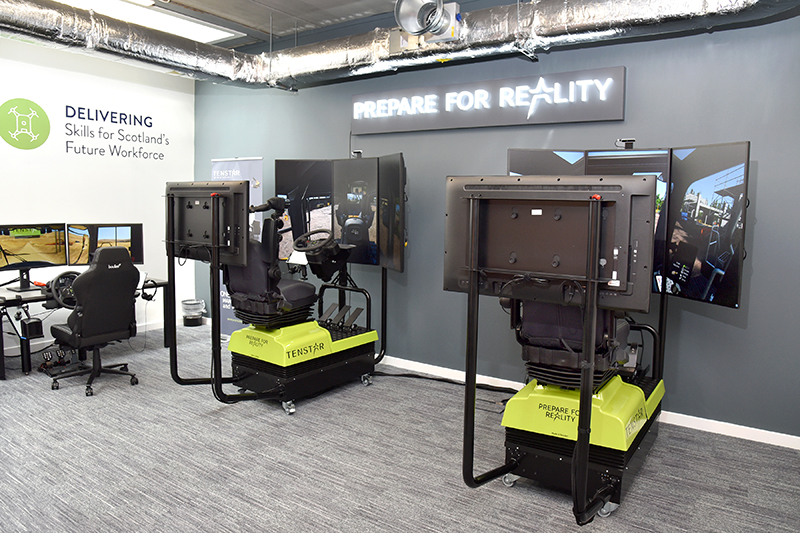
THE curriculum at Forth Valley College’s (FVC) new state-of-the-art Multi-Vehicle Driving Simulator Suite will be driven by industry needs, reflecting the learning institute’s ambition to ensure students and delegates have access to training linked to major projects planned and underway across the three regions it covers.
The Multi-Vehicle Driving Simulation Suite forms part of the college’s £4 million Skills Transition Centre, funded through the Falkirk and Grangemouth Growth Deal. Project Plant was given an exclusive tour of the impressive facilities, which were created in collaboration with Swedish simulator specialist Tenstar and GVAV Limited.
Open for academic and commercial use, as well as to local schools, the facility features two large-motion simulator units and two desktop simulators, as well as Pico VR headsets and a VR lecturer avatar station. Each simulator features authentic controls; motion feedback such as engine rumbles, resistance, and tilt; as well as accurate physics with realistic machine movements.
Users have access to a plethora of machinery, including track excavators, wheel excavators, wheel loaders, articulated haulers, bulldozers, motor grader, tower cranes, and telescopic handlers.
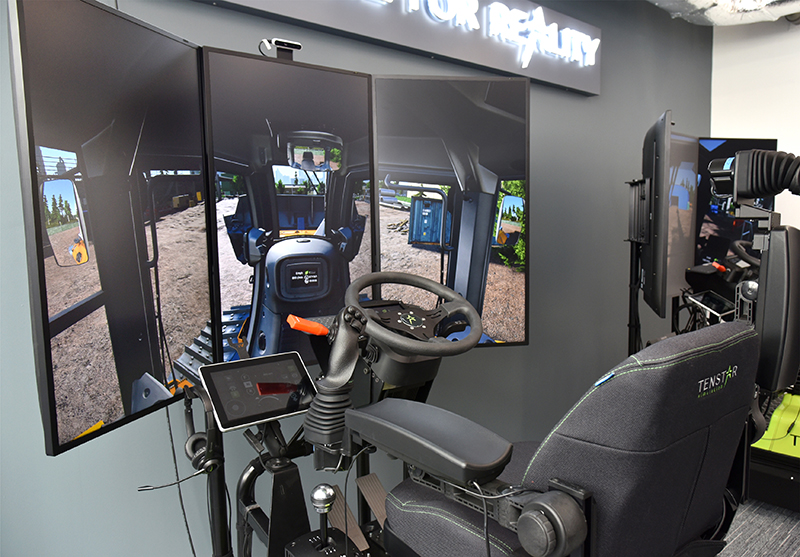
The simulators can be operated simultaneously in the same virtual world, meaning learners can work collaboratively on site tasks – with the machines registering aspects such as collisions or those on foot entering work areas.
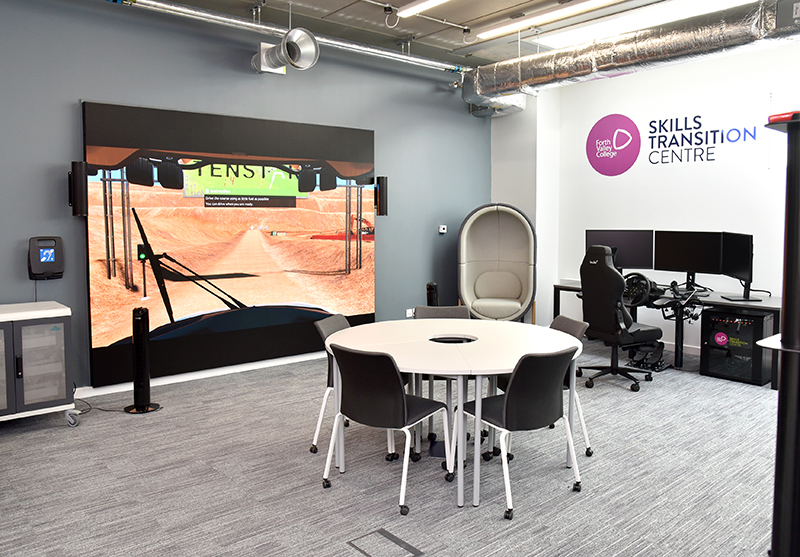
Intent on creating a facility bespoke to FVC’s needs, GVAV created a specialised LED display wall. This allows up to five simulator and VR screen views to be displayed simultaneously, meaning learners can view what’s happening live without having to crowd around peers on the machinery.
With campuses in Falkirk, Alloa, and Stirling, FVC covers areas that currently have £362.7 million in city region deal projects alone, as well as the Forth Green Freeport and transition of the Grangemouth Refinery.
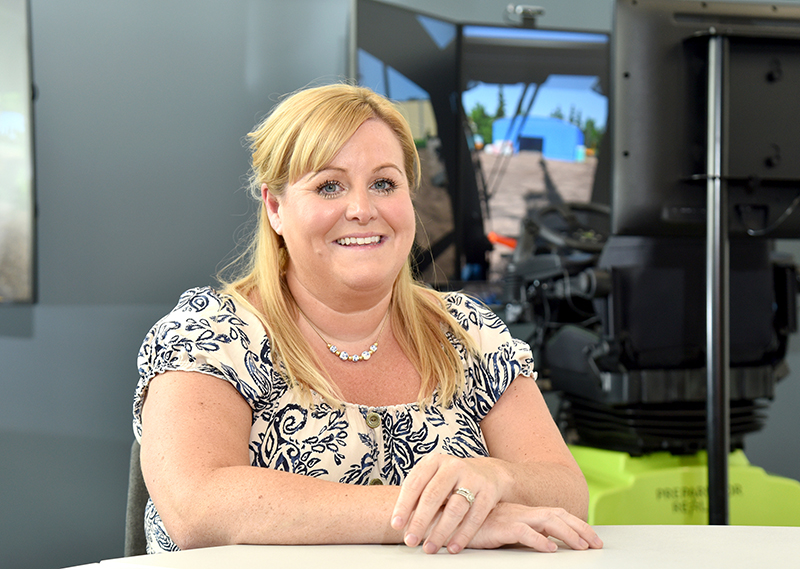
“We have to collaborate with industry to make sure the Multi-Vehicle Driving Simulator Suite delivers the skills required,” Laura Fraser, Skills Transition Centre project manager, told Project Plant. “We can tailor courses, support employers, listen to local intelligence in terms of skills requirements, and adapt to it.”
FVC is in dialogue with Tier 1 contractors operating in the local area; the Scottish Plant Owners Association (SPOA), which has also invested in Tenstar technology, on sector needs and how hours spent on simulators should be recognised; as well as the new CECA Academy – which operates in the wider Skills Transition Centre – about how the technology can be incorporated into its training.
“We have a stakeholder steering group as part of the Skills Transition Centre to ensure we’re in alignment with the requirements of the area,” Laura added. “The CECA Academy is going to be really important for the campus and local workforce that will be required in terms of infrastructure projects.”
With thousands of construction jobs anticipated to be created across the Falkirk and Grangemouth and Stirling and Clackmannanshire city region deals, FVC’s Skills Transition Centre is honed to not only ensure locals have access to these roles, but are first aware of them.
Early engagement is considered vital in attracting young talent to the sector. There are regular visits from local schools, which help to educate both youngsters and teachers of the opportunities in plant and the wider construction sector.
Elsewhere in the centre is Soldamatic augmented reality (AR) welding, described as a ‘total game-changer’ by the college – which has resulted in an increase in female enrolment in welding this year. Learners use realistic tools that simulate live welding, and helmets with visual screens that show realistic sparks, with software providing instant feedback on performance.
“It has the exact same look and feel – same helmet, weight of tools – but allows for practice without any kind of risk or health and safety implications,” Laura explained, before telling of annual AR welding competitions for local schools held at the Falkirk Campus . “We’re seeing a real excitement around this from our school groups and those in the industry.”
The same impact is anticipated from the Multi-Vehicle Driving Simulator Suite, particularly thanks to its gamification element. Although incredibly realistic, it is immersive, features the same high-end graphics of top video games, and challenges users. With UK Research and Innovation (UKRI) findings revealing that 85% of 16-24-year-olds in the UK play video games, as well as 53% of all adults, it’s hoped to be an accessible gateway for those who may otherwise not have considered plant.
“Not only are young people into gaming, but their digital capabilities are very advanced,” Laura said. “They are able to use the gear sticks, steering wheel, and pedals – and it is a really enjoyable experience, but it’s also having an impact on them in regards to what careers are available.
“Whilst it is gamified, it’s also very realistic as well – you start to stress test with different weather conditions or collaborative tasks, so there’s the whole problem solving and team building aspect.”
On the day Project Plant visited the facility, a group of over 20 local youths were enjoying a guided tour of the wider Skills Transition Centre. They will have their pick from the plant simulators to construction craft and trade skills to architectural design, construction management, to civil engineering and construction technology.
“It’s giving them the opportunity to explore a career that they maybe never thought about – and often there’s a massive skills gap, a massive demand (for workers) and with great career progression opportunities,” Laura concluded. “We are providing learners with access to one of the most advanced immersive training environments of its kind in Scotland. This space will be accessed by school level right through to existing workforce who require upskilling or retraining.”