

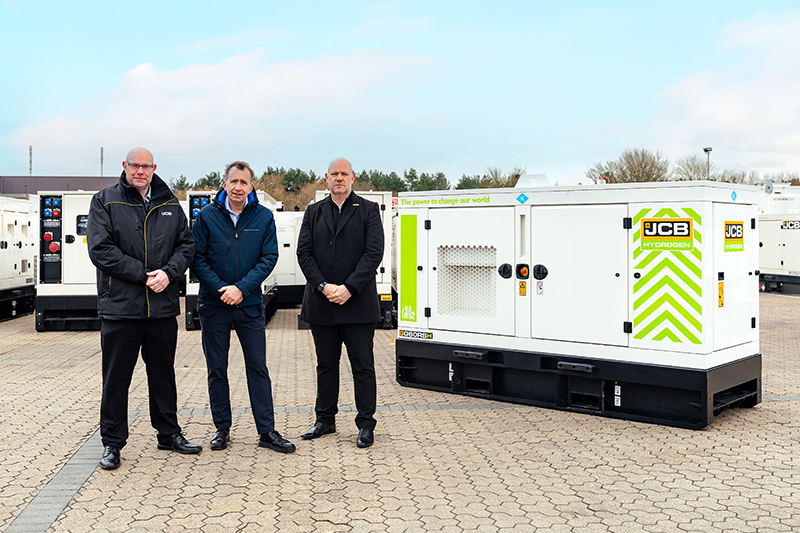
COMMERCIAL asset supplier Dawsongroup | energy solutions has invested in the world’s first hydrogen-powered JCB generator.
The G60RS H genset – powered by JCB’s hydrogen combustion engine – is said to deliver the same power, performance and efficiency as its diesel equivalent, but without carbon emissions at the point of use.
The model joins 155 JCB Stage III and Stage V generators in the Dawsongroup | energy solutions fleet, ranging from 20kVA to 500kVA. This includes an investment of more than £4 million in Stage V models in the last year.
Dawsongroup | energy solutions MD Paul Ridley said, “In the temporary power industry, reliability and efficiency are critical. The equipment we supply must meet the highest standards, which is why we continue to work with Watling JCB. The support has always been first class and is well suited to the fast pace of our business.
“We are committed to ensuring our customers have access to the right power solutions for both their immediate and long-term needs. Energy technologies are evolving rapidly, and hydrogen is widely seen as a key part of the future energy mix. By investing in this generator, we are enabling our customers, who have already shown strong interest to explore this technology, to adopt it at an early stage.
“The first hydrogen generator in our fleet will be installed as standby power for a data centre customer. With growing demand driven by AI and digital services, data centres require reliable power while also facing increasing environmental scrutiny. Hydrogen offers a lower carbon alternative without compromising performance.”
At the heart of the G60RS H is JCB’s hydrogen combustion engine, designed and built in the UK as part of a £100 million programme to provide practical, zero-carbon alternatives to diesel. The generator works in tandem with JCB’s three-phase Powerpack to create on-site ‘microgrids’ utilising both battery-electric and hydrogen combustion technology.
JCB revealed that, with energy supplied to the Powerpack from renewable sources, the generator effectively becomes a battery charger, only running for short periods when the battery needs topping up, or at peak load points. This reduces fuel consumption and offers long periods of silent or quiet hours operation.