
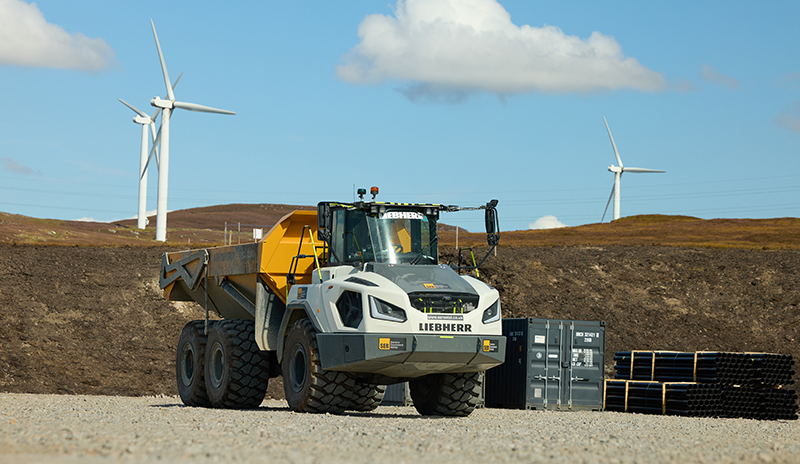
As large-scale infrastructure and energy projects gather pace across Scotland, contractors are rethinking how they source and deploy heavy equipment. Mark Need, Stevens Equipment Rental’s sales manager for Scotland and the north of England, explains the rental trends emerging from Scottish sites and what they mean for 2026.
WHILE 2025 was busy for Stevens Equipment Rental (SER) across the UK, nowhere is project scale and intensity more evident than in Scotland. This is driven by a strong pipeline of renewable energy developments, and associated housing, and road construction over the next 10 years, which is reshaping how contractors plan their plant strategies.
Rental is increasingly the default choice
The stop-start nature of the economy is influencing decisions across the industry, particularly on large Scottish projects requiring significant equipment fleets.
When considering a multi-million-pound purchase, contractors must ask whether there will be enough work to keep the machine fully utilised over the next five years. If there’s any doubt, hiring is the safer option: the machine covers the contract duration and can then be returned with no ongoing liability. This strategy is now common among tier one contractors as well as smaller firms and after a wave of simultaneous project starts in 2025, a similar rush for equipment is expected in 2026.
Larger machines for larger jobs
It’s not just the number of machines on hire that’s increasing; Scottish projects are pushing the industry toward larger equipment. You simply can’t build a wind farm, for example, with smaller machines.
Furthermore, with multiple projects green-lit simultaneously and high volumes to move under tight deadlines, contractors are looking to maximise productivity from every asset.
One operator in a 50-tonne excavator or 45-tonne hauler can dramatically impact overall site efficiency, especially with a shortage of skilled operators.
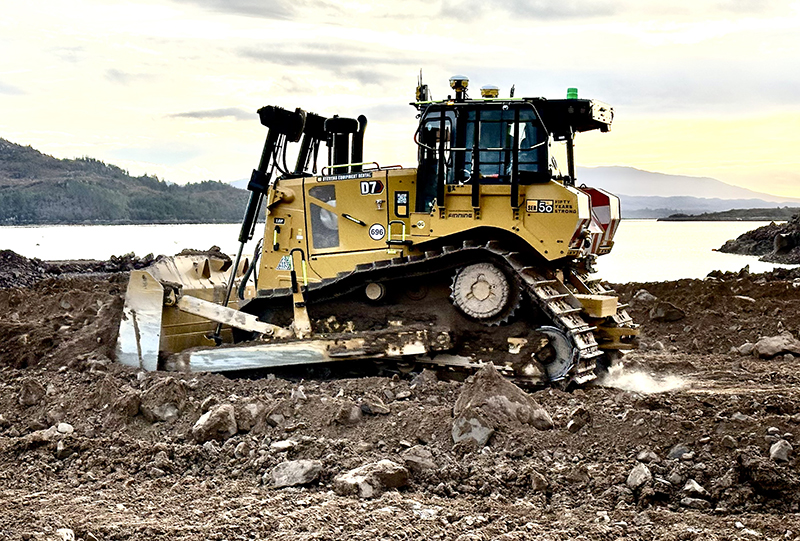
Safety technology is now a baseline expectation
A few years ago, advanced safety systems were a niche requirement for rental machines. But with today’s market being driven by major, often publicly funded infrastructure projects, the highest safety standards are no longer optional. Safety features have become the ‘door opener’ to getting onto a site – whether for tier one contractors or the tier two contractors supporting them. Contractors were asking us to provide machines with features such as 360° cameras, human form detection, and digital thumbs-up kits already fitted, to save them the time and effort of arranging installation themselves.
These technologies now form part of our premium ‘SER spec’, allowing machines to roll off transport and onto the strictest sites fully compliant from day one.
Sustainability efforts remain pragmatic
While sustainability is on everyone’s agenda, commercially viable electric machines for large-scale earthmoving projects are still in their infancy. For now, the most effective way to reduce environmental impact on large Scottish projects is through modern, fuel-efficient diesel machines.
Operating a young fleet with the latest Stage V engines delivers emissions reductions without compromising productivity — which remains the overriding priority on major programmes.
Reducing risk is the real objective
Across all of these trends, one theme stands out: risk reduction. For contractors working in Scotland’s current market, the biggest risks are not hire rates, but machines that aren’t available when promised, don’t meet safety standards, or break down on site.
At SER, our approach is to reduce those risks wherever possible — by investing ahead of demand, focusing on heavy-duty equipment, specifying safety technology at the point of purchase, and strengthening our on-the-ground presence in Scotland through local engineers and planned depot facilities.
As Scotland continues to play a central role in the UK’s construction pipeline, contractors that align their plant strategies with these realities will be best placed to deliver projects safely, efficiently and with confidence in 2026 and beyond.