

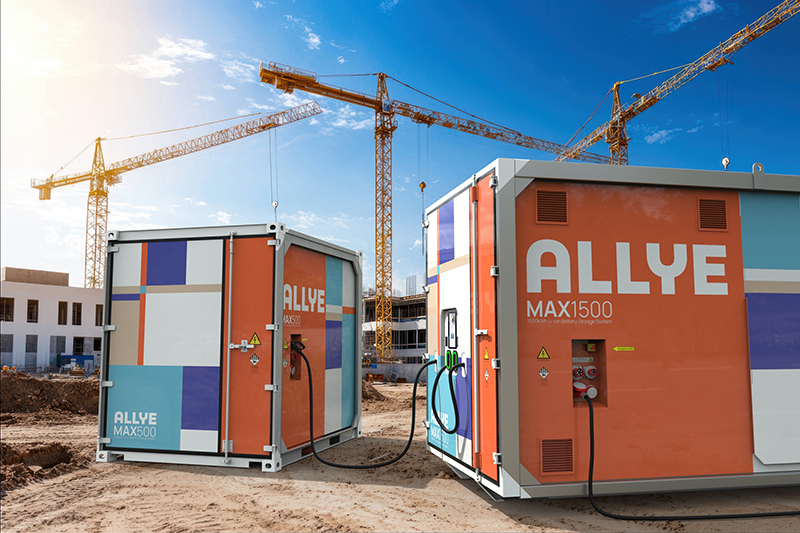
ALLYE Energy has told Project Plant of its ambitions to break into the Scottish construction sector, just two months after signing a £1+ million deal to supply English sites with its modular energy storage solutions made from repurposed EV batteries.
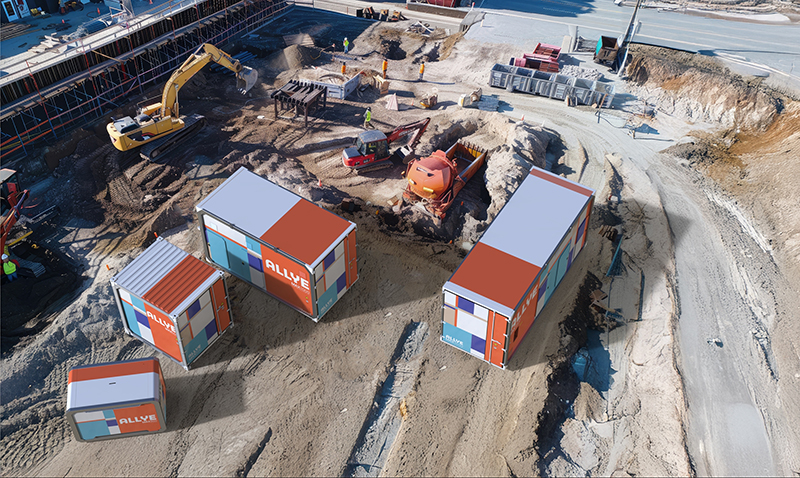
Representing its largest deal to date, it will see Allye supply Vital Power Group with five of its MAX500 units. Providing 500 kWh of storage and a 420 kW power output, the systems are designed for keeping heavy electric plant equipment charged on large construction sites.
Allye’s solutions are made from EV batteries sourced from cars prematurely written off in the UK. Estimates from the firm show that this results in a 60% lower carbon footprint than systems using new batteries, while the solutions pay for themselves within 24 months and have a lifespan of 12-15 years.
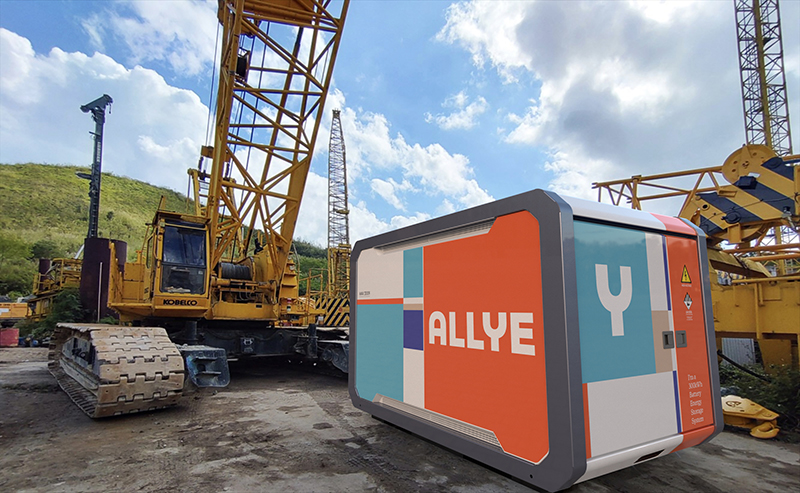
The business was founded in 2021 by Jonathan Carrier. With over 25 years’ experience working on EV batteries, CEO Jonathan was involved in the ‘very early’ electrification at McLaren and on Jaguar Land Rover’s I-Pace line.
“The grid is really constrained, and people can’t get enough power for the push toward electrification,” Jonathan told Project Plant. “You’ve got a real challenge – everything has to go electric and you just can’t get the power when you need it, because the infrastructure isn’t there or, if it is, it’s too old – and it would cost millions to upgrade the power. In sectors like construction, where businesses may want electric machinery, the one thing that will stop them is the inability to recharge it.”
Any electric vehicle on the UK market – with a maximum age of four years – can be utilised, but the Tesla Model 3 and Y are seen as optimum. Tesla’s intensive, multi-stage testing process makes the batteries well-suited to the demands of a construction site; however, any EV battery on UK roads will have undergone adequate testing and hold suitable certifications.

“The benefit of our technology is we have built a platform that means we can use anybody’s batteries – so we’re happy to work with any car manufacturer with a fully developed battery pack,” Jonathan added. “But equally we don’t have to use cars. In the future, for construction and plant, we could actually be circular and use a truck or excavator battery and repurpose it into energy storage that can be used to support charging.”
Construction remains one of Allye’s biggest markets, alongside media production sets and EV charging. Despite working across the UK and making inroads into Europe, Scotland remains unbroken territory for the firm – outside of trial work with Perth-headquartered SSE and its networks business SSEN.
The smart asset nature of the systems is well suited to Scotland, with issues able to be diagnosed and rectified remotely by Allye –a particular benefit for those operating in remote areas who sometimes have to endure lengthy waits for engineers to arrive.
AI and machine learning also optimise how the battery behaves, with human input – on issues such as energy and Co2 output and power levels – alongside analysis of the battery’s performance and usage being fed into an algorithm to maximise efficiency.
“It’s really about giving the intelligence to a battery system so that it can respond to exactly the application that its intended for,” Jonathan explained. “Then it’s also about making sure the battery is utilised in the best way for the customer – delivering the most value.”
The systems are also scalable, with Jonathan revealing that Allye produces solutions from 300KwH up to 1.5MW that can be connected in parallel. Furthermore, the firm can tailor solutions to different sites.
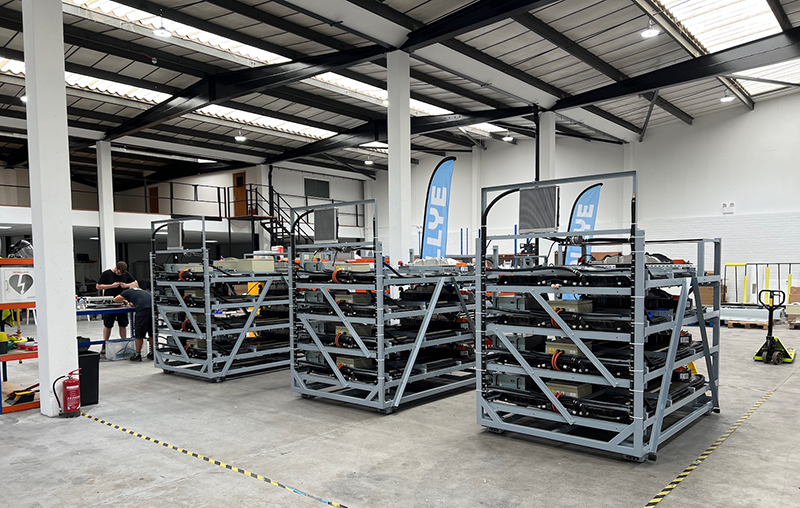
“We’re not here to just provide a cookie cutter (solution),” Jonathan said. “If you take powering tower cranes, for example, you don’t need lots of energy, but you do need lots of power because of the high and instantaneous demand that they have. We can tailor our systems to deliver more power or take capacity out.”
Moving forward, Jonathan expects Allye’s offering to advance with a ‘huge amount’ of chemistry evolution anticipated in EV batteries in future. “We’ll see a huge amount of (advancements in) safety and fire protection and a lot more around performance. Maybe not as soon as people think, but we will see batteries that are more energy dense and be able to deliver more power at cheaper prices.”