
BALFOUR Beatty has announced it has successfully completed a trial of Engine Carbon Clean (ECC) technology on a compact tamping machine, marking progress in reducing carbon emissions and improving engine performance across its rail operations.
ECC is a patented solution designed by Advanced Hydrogen Technologies, which uses on-demand hydrogen to remove carbon build-up inside combustion engines. By introducing hydrogen into the air intake, the system enables engines to draw exactly what they need, improving fuel efficiency, extending asset lifecycle, and reducing emissions including CO₂, CO, NOx and N₂O.
As the first infrastructure company to apply this tech to rail-mounted plant, Balfour Beatty revealed it is tackling Scope 1 emissions head-on. The trial, which simulated a full year of operation in line with standard maintenance cycles, delivered a 15.79% reduction in emissions. The contractor now plans to roll out ECC across its entire tamper fleet.
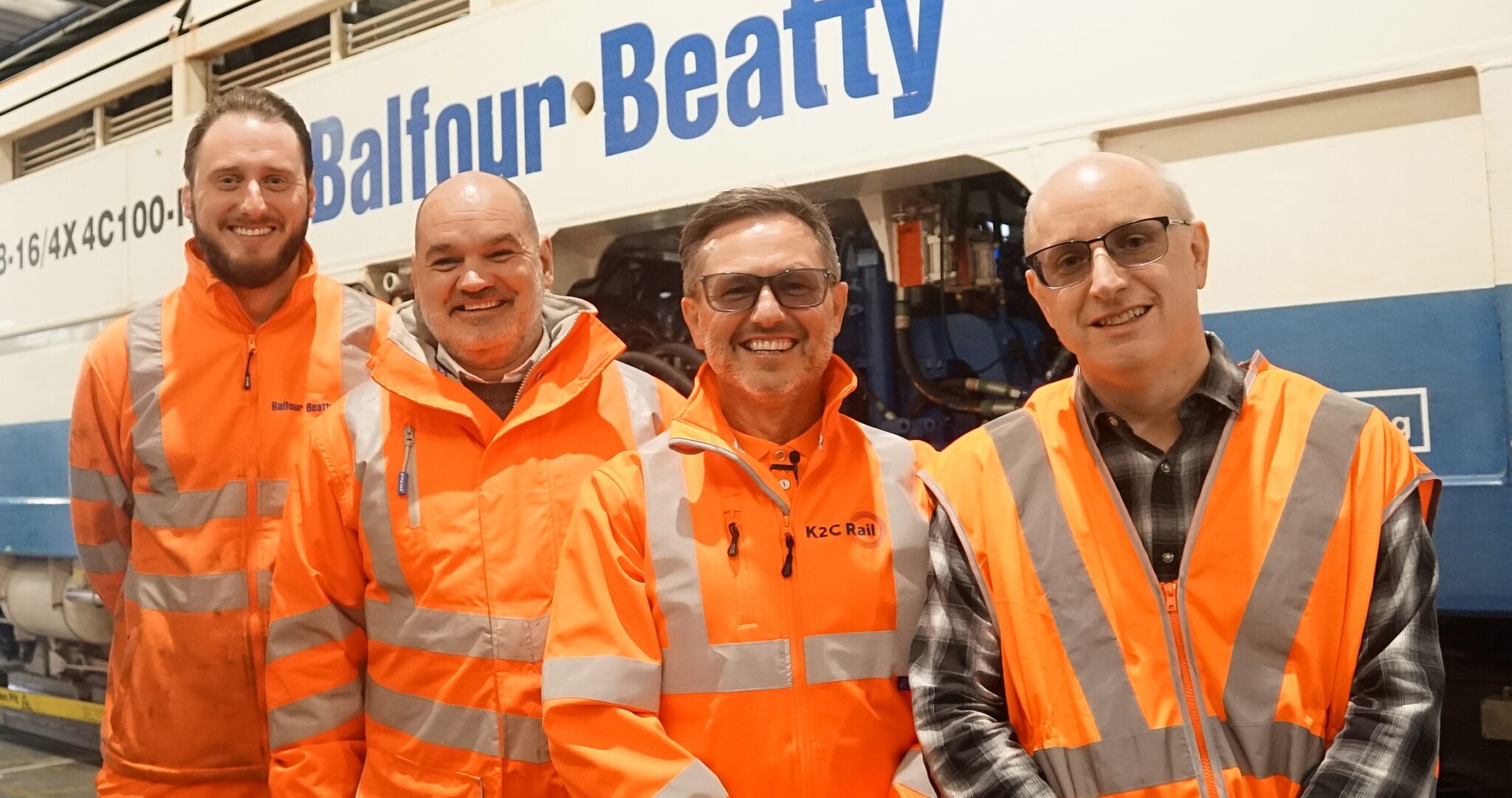
George Chaplin, investment & innovation manager at Balfour Beatty, said, “ECC is a simple, non-intrusive solution that integrates seamlessly into our servicing schedules. By extending engine life, reducing maintenance needs and lowering fuel consumption, ECC delivers measurable carbon and cost savings while minimising downtime – a smart, sustainable investment for our fleet.”
ECC technology is already proven on road vehicles. Working with K2C Rail and partners 1stinrail, part of the RSK Group, ECC aims to ensure compliance with rail industry standards while supporting ESG requirements under the International Financial Reporting Standards mandate.
Tony Kearns, MD at K2C Rail Ltd, added, “We’re committed to bringing innovative, sustainable solutions to the rail sector. Partnering with ECC and Balfour Beatty demonstrates our shared ambition to reduce Scope 1, 2 and 3 emissions across the supply chain.”